
Engagement and Trauma: Building Safety and Trust in Populations with High-Acuity Needs
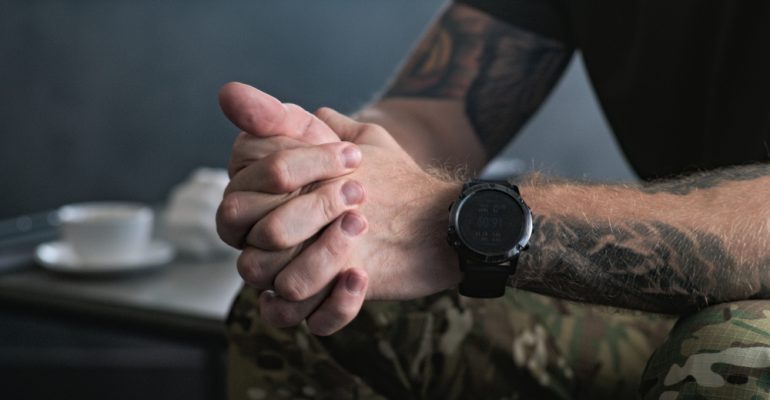
Engagement and Trauma: Building Safety and Trust in Populations with High-Acuity Needs
Authors
Frederick Shack, LMSW1,4
Mardoche Sidor, MD1,2,3
Gary Jenkins, MPA1
Jose Cotto, LCSW1,5
Karen Dubin, PhD, LCSW2,4
Lesmore Willis Jr, MPA, MHA1
Affiliations
1Urban Pathways, New York, NY
2SWEET Institute, New York, NY
3Columbia University Center for Psychoanalytic Study and Research, New York, NY
4Columbia University, School of Social Work, New York, NY
5New York University, Department of Social Work, New York, NY
Correspondence concerning this article should be addressed to Mardoche Sidor, MD, Urban Pathways, at msidor@urbanpathways.org
Abstract
Trauma profoundly shapes how individuals perceive safety, relationships, and systems of care. In supportive housing and community mental health, residents with trauma histories often present with mistrust, withdrawal, or conflict that can be misinterpreted as “non-engagement.” This article examines how the Four-Stage Engagement Model—Sitting, Listening, Empathizing, Collaborating—creates safety and trust for populations with high-acuity needs. Drawing on trauma theory, polyvagal science, and recovery research, we highlight how engagement restores relational security, counters retraumatization, and promotes healing. Composite case studies from Urban Pathways illustrate trauma-informed engagement in practice.
Keywords
Engagement, Trauma, Safety, Trust, Populations with High-Acuity Needs, Trauma-Informed Care, Polyvagal Theory, Supportive Housing
Introduction
Populations with high-acuity needs, including individuals experiencing homelessness, serious mental illness, and substance use disorders, are disproportionately impacted by trauma (Hopper et al., 2010). Trauma alters stress regulation, fosters hypervigilance, and erodes trust in relationships and systems (van der Kolk, 2014). Staff often misinterpret trauma-related behaviors as resistance or disinterest. The Four-Stage Engagement Model reframes these behaviors as protective adaptations and provides a relational framework for rebuilding safety and trust.
Theoretical Framework
Engagement and trauma-informed care intersect through:
- Polyvagal Theory: Safety and co-regulation restore autonomic balance (Porges, 2011).
- Trauma Theory: Trauma fragments trust and requires corrective relational experiences for repair (van der Kolk, 2014).
- SAMHSA’s Trauma-Informed Principles: Safety, trustworthiness, empowerment, and collaboration guide systemic care (SAMHSA, 2014).
- Attachment Theory: Consistent relational presence repairs disrupted attachment patterns (Siegel, 2012).
Application/Analysis
At Urban Pathways, staff are applying trauma-informed engagement by:
- Sitting: Learning to provide calm, non-demanding presence that reduces hyperarousal.
- Listening: Learning to validate traumatic narratives without rushing to problem-solving.
- Empathizing: Learning to offer unconditional positive regard to counter internalized stigma.
- Collaborating: Learning to co-create goals that respect trauma history and current level of preparedness.
Composite Case Example: A resident with repeated violent outbursts was initially labeled “non-compliant.” Staff reframed the behavior as trauma-related hypervigilance. Through consistent sitting and empathic presence, the resident began to trust staff; and this is expected to be followed by reduced crises and increased participation in collaborative planning.
Implications
- Practice: Engagement strategies are to be trauma-informed to avoid retraumatization.
- Supervision: Reflective supervision is to support staff in managing countertransference with trauma-affected residents.
- Policy: Programs ought to mandate trauma-informed engagement as a standard of care.
- Research: Studies need to measure the impact of engagement on trauma recovery outcomes.
- Systems: Trauma-informed engagement needs to extend across all staff roles, not only clinicians.
Conclusion
Trauma is not only a clinical diagnosis but a relational reality. The Four-Stage Engagement Model provides a roadmap for restoring safety and trust in populations with high-acuity needs, transforming engagement into a trauma-informed healing practice.
References
- Hopper, Elizabeth K., et al. “Shelter from the Storm: Trauma-Informed Care in Homelessness Services Settings.” The Open Health Services and Policy Journal, vol. 3, no. 2, 2010, pp. 80–100.
- Porges, Stephen W. The Polyvagal Theory: Neurophysiological Foundations of Emotions, Attachment, Communication, and Self-Regulation. Norton, 2011.
- SAMHSA’s Concept of Trauma and Guidance for a Trauma-Informed Approach. HHS Publication, 2014.
- Siegel, Daniel J. The Developing Mind: How Relationships and the Brain Interact to Shape Who We Are. 2nd ed., Guilford Press, 2012.
- van der Kolk, Bessel A. The Body Keeps the Score: Brain, Mind, and Body in the Healing of Trauma. Viking, 2014.
This article is part of a collaboration between SWEET Institute and Urban Pathways.

Read the full scientific version HERE