From Compliance to Consciousness: Rethinking the Purpose of Supervision

From Compliance to Consciousness: Rethinking the Purpose of Supervision
Most supervision meetings sound like this: “How many clients did you see this week?” “Did you complete the note?” “Make sure the treatment plan is updated.” Of course, documentation matters, compliance matters, and risk management matters. However, if supervision stops there, something essential is missing, for none of these develop a clinician.
The Hidden Crisis in Clinical Supervision
Across mental health settings, supervisors are often promoted because they are excellent clinicians; yet clinical excellence does not automatically translate into supervisory excellence. Research indicates that many supervisors receive minimal training in supervision itself (Bernard & Goodyear, 2019). As a result, supervision frequently becomes administrative oversight, documentation review, and crisis troubleshooting. What is then lost is the deeper developmental function of supervision.
The Developmental Role of Supervision
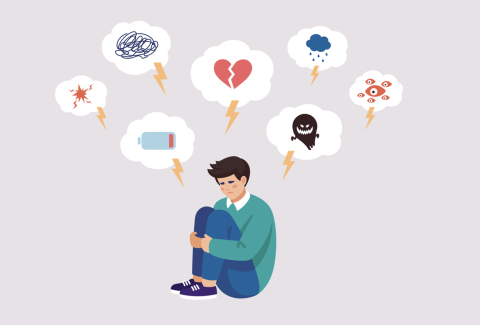
Effective supervision supports clinician growth across stages of professional development. Early-career clinicians often struggle with anxiety about competence, emotional overwhelm, rigid adherence to technique, and difficulty managing complex client dynamics
Without supportive supervision, these struggles may lead to burnout, defensive practice, and disengagement from the profession. Developmental supervision models emphasize that clinicians require different types of support at different stages of training (Stoltenberg & McNeill, 2010). Supervisors ought to therefore move beyond checking tasks and instead support confidence, reflective thinking, and professional identity formation.
The SWEET Perspective
At the SWEET Institute, we often say supervision ought to develop the clinician, and not just monitor the work. This requires supervisors to cultivate three core supervisory capacities.
The first one is presence. This is where supervisees are highly sensitive to their supervisor’s emotional state. If the supervisor is anxious or rushed, supervisees become defensive. If the supervisor is grounded and curious, supervisees become reflective. Neuroscience research shows that emotional regulation is contagious through interpersonal neurobiology and co-regulation processes (Siegel, 2012).
The second core capacity is curiosity, and supervision thrives on curiosity. Instead of asking, “Why did you do that?” the supervisor can ask, “Help me understand what was happening for you in that moment.” Curiosity invites reflection, and judgment shuts it down.
The third cord capacity is humility. Supervisors who acknowledge uncertainty create psychological safety, and psychological safety has been shown to significantly increase learning and innovation in teams (Edmondson, 1999). Supervisees ought to feel safe to say: “I don’t know what to do;” “I made a mistake;” “I felt overwhelmed in that session.” Without safety, supervision becomes performance rather than learning.
The Cost of Poor Supervision
When supervision is reduced to compliance, several things happen. Clinicians hide mistakes, avoid difficult conversations, disengage emotionally, and lose confidence. Eventually, then, burnout follows. Research shows that supervision quality is strongly associated with clinician retention and job satisfaction (Knudsen et al., 2008). Supervision is therefore not only a clinical responsibility. It is also a workforce sustainability strategy.
Reflection
Ask yourself: Have you ever felt unprepared as a supervisor? Have you ever left supervision wishing you had asked a better question? Most supervisors have, and that is precisely why this conversation matters.
SWEET Call to Action
On Friday, April 17, 2026, the SWEET Institute will host a virtual conference exploring the future of clinical supervision. Click HERE to Register
Together, we will examine the psychology of supervision, how to cultivate reflective supervision, how supervisors influence clinician development, and how to build psychologically safe supervisory relationships.
If you supervise clinicians, this conference is for you. Click HERE to Register
Remember, supervision is not to simply ensure compliance. It ought to cultivate conscious clinicians.
References
- Bernard, J., & Goodyear, R. (2019). Fundamentals of Clinical Supervision.
- Edmondson, A. (1999). Psychological safety and learning behavior in work teams. Administrative Science Quarterly.
- Knudsen, H., et al. (2008). Clinical supervision and counselor job satisfaction. Journal of Substance Abuse Treatment.
- Siegel, D. (2012). The Developing Mind.
- Stoltenberg, C., & McNeill, B. (2010). IDM Supervision Model.