Humility: The Strength to Know You May Be Wrong

Humility: The Strength to Know You May Be Wrong
“I was wrong,” the learner said.
The facilitator waited.
“I completely misread the situation.”
“And what did you learn?”
The learner looked surprised. “You’re not going to tell me what I should have done?”
“Not yet.”
“Why?”
“Because I’m more interested in what happened after you realized you were wrong.”
That question points toward something we do not discuss nearly enough in education. We spend enormous amounts of time teaching people how to know. We teach facts, theories, techniques, frameworks, evidence, reasoning, and decision-making. We reward correct answers, celebrate expertise, and build careers partly around becoming people who know what they are doing.
Yet we spend considerably less time teaching people what to do when they discover that something they believed was wrong. That may be one of the most important capacities a learner can develop: the ability to say, “I may be wrong.”
This is not because we lack confidence, or because every opinion is equally valid. It is not because knowledge is impossible; rather, it is because human knowledge is always incomplete. That is where humility enters.
Humility Is Not Thinking Less of Yourself
Humility is sometimes confused with self-deprecation. We imagine the humble person as someone who minimizes accomplishments, refuses recognition, speaks softly about abilities, or makes themselves smaller so that others can feel larger. Yet that is not necessarily humility. In some circumstances, it may simply be another distortion of reality.
If you know something, humility does not require pretending that you do not know it. If you have developed expertise, humility does not require denying your expertise. If you have accomplished something meaningful, humility does not require diminishing the accomplishment.
Humility is not thinking less of yourself. It is attempting to see yourself more accurately. That includes recognizing your strengths. It also includes recognizing your limitations. It means knowing what you know while remaining aware that there are things you do not know, things you cannot see, things you may have misunderstood, and things that new evidence may require you to reconsider.
In that sense, humility is not the opposite of confidence. It is what keeps confidence connected to reality.
The More We Know, the More Important Humility Becomes
A beginner usually knows that they are a beginner. They ask questions because they expect not to know. They look for guidance because uncertainty is built into their role.
Expertise changes the situation. As our knowledge grows, people increasingly look to us for answers; experience gives us patterns to recognize; and training gives us frameworks. Repetition also gives us speed, and we become better at knowing what to look for and what to do next.
This is enormously valuable. Yet expertise creates a paradox: the more we know, the easier it can become to forget how much remains unknown.
A clinician who has seen hundreds of similar presentations may recognize a pattern within minutes. A leader who has managed dozens of crises may quickly anticipate what will happen next. A teacher who has taught the same subject for twenty years may immediately recognize a learner’s misunderstanding. Often, they will be right; but not always.
The question is what happens on the occasion when reality does not fit the pattern. Does expertise become defensive? Or does expertise become curious?
Humility makes the second possibility available. It allows the experienced person to say, “This resembles something I know. Let me make sure I am not missing what makes this situation different.” That, in turn, is disciplined expertise.
Humility Protects Us From Our Own Minds
One reason humility matters is that human beings are not neutral processors of information. We interpret the world through expectations, previous experiences, schemas, emotions, motivations, identities, and beliefs. Cognitive psychology has documented numerous ways in which judgments can be influenced by biases that operate without our deliberate intention (Kahneman, 2011; Nickerson, 1998).
The problem is not simply that other people are biased. We are too. Biases are often easiest to recognize when they belong to someone else. Our own thinking feels different. It feels like reality.
That is precisely why humility matters. Humility inserts a small but powerful space between our perception and the world itself: This is what I see. But what I see may not be everything that is there.
That, in turn, can transform thinking.
Humility Does Not Mean Everything Is Uncertain
If humility means recognizing the limits of knowledge, one might conclude that we should never feel confident about anything. That would be equally problematic.
Evidence varies in quality. Some explanations are much better supported than others. Expertise matters, scientific consensus matters, and facts do not become opinions simply because human beings are fallible.
Intellectual humility does not require us to treat well-supported knowledge and unsupported speculation as equivalent. Instead, it asks us to calibrate confidence to evidence.
We can say, “Based on what we currently know, this is the best-supported conclusion.” We can simultaneously say, “If better evidence emerges, we should be willing to revise it.” Those statements do not contradict one another. Together, they describe mature thinking.
Research on intellectual humility has increasingly examined this capacity to recognize the fallibility and limitations of one’s beliefs without abandoning conviction altogether (Leary et al., 2017; Porter et al., 2022). Humility therefore sits between rigid certainty and indiscriminate doubt. The goal is appropriate confidence.
Humility Changes How We Learn
Imagine two learners receiving corrective feedback. The first experiences the correction primarily as a threat: If I was wrong, perhaps I am not as capable as I thought. The natural response may be to explain, defend, minimize, or search for reasons the feedback does not apply.
The second learner experiences the same correction differently: There is something here I did not see.
The error has not changed. The relationship to the error has.
Learning requires the ability to encounter discrepancy: something we thought was true turns out to be incomplete; something we did produces an unexpected outcome; and someone sees something we missed. Evidence challenges an assumption.
If every discrepancy becomes an assault on identity, learning becomes extraordinarily difficult. Humility makes another response possible: Interesting. What can this teach me?
That is one reason humility is not weakness. It takes considerable internal strength to examine information that threatens something we believe about ourselves.
Humility Changes Leadership
Humility becomes especially important when power increases. The higher someone rises within an organization, the easier it may become for others to hesitate before correcting them. People may soften disagreement, withhold uncomfortable information, or tell leaders what they believe leaders want to hear.
The result can be dangerous: increasing authority accompanied by decreasing access to honest feedback.
A humble leader therefore cannot merely be willing to receive feedback. The leader may need to actively create conditions in which feedback can reach them. “What am I missing?” “Where do you disagree with me?” “What are people reluctant to tell me?” “What could make this plan fail?”
Those are not ceremonial questions. Their value depends on whether people believe honest answers are actually welcome. In other words, humility has to become behavioral. It must be visible in how we respond when someone tells us something we did not want to hear.
Humility Changes Clinical Work
The same principle matters profoundly in helping professions. A clinician necessarily brings knowledge to an encounter. Training matters, diagnostic reasoning matters, evidence matters, and experience matters.
However, the person sitting across from us also brings something the clinician can never possess completely: direct access to that person’s lived expertise.
Clinical expertise and lived expertise therefore need not compete. They can inform one another. The clinician may know a great deal about depression. The person knows what this depression feels like in this life, in this family, in this body, at this moment.
Humility allows both forms of knowledge to enter the room. Instead of assuming, “I know what this person needs,” the clinician can ask, “What matters to you?” Instead of interpreting nonadherence immediately as resistance, we can ask what the person understands, fears, values, wants, or has experienced.
Humility does not reduce professional responsibility. It improves the information on which professional responsibility depends.
Humility and the SWEET Paradigm
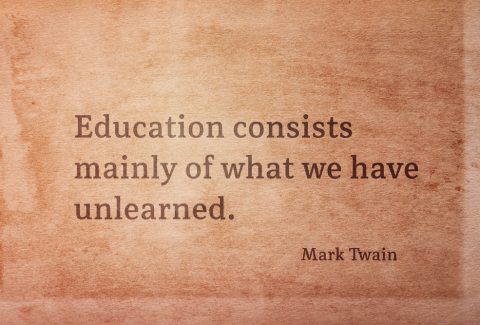
Humility sits at the center of learning, unlearning, relearning, and continuous learning. To learn, I ought to accept that there is something I do not yet know. To unlearn, I need to accept that something I learned may need reconsideration. To relearn, I first accept that another way may be possible. To continue learning, I accept that no amount of expertise makes me finished.
This is also why the Socratic method matters so deeply within the SWEET Paradigm. A genuine question contains humility within it. When we ask Why? How do we know? What evidence supports this? What might contradict it? Whose perspective is missing? What else could be true? We are acknowledging that our first answer may not be our final answer.
The SWEET Formula—What, Who, Why, How, When, Where, and Then What—therefore does more than organize knowledge. It disciplines certainty. It teaches us to look again.
Humility Changes Relationships
Humility may also transform ordinary human relationships because conflict often contains an unspoken assumption: I understand what happened, and you are the problem.
Sometimes the other person did behave undesirably. Humility does not require denying that. But even then, we can ask whether there is anything we have not understood. What did I contribute? What did I assume? What did I fail to communicate? What might the other person have experienced differently?
Humility makes room for complexity without eliminating accountability. It allows us to apologize without collapsing. It allows us to change our minds without experiencing the change as humiliation. It allows us to say, “I misunderstood you.” Or, perhaps even more powerfully: “You were right.”
Those words can be difficult. But sometimes they repair what certainty damaged.
The Freedom of Being Correctable
There is an unexpected freedom in humility. If we believe we must always be right, every disagreement becomes dangerous, every mistake threatens identity, and every correction requires defense.
Yet if we permit ourselves to be correctable, something changes. We can update, we can apologize, we can reconsider, and we can say, “I used to think this. I have learned something since then.”
There is no shame in that sentence. It may be evidence of growth.
The goal of learning was never to construct an identity that could never be corrected. The goal was to become more capable of encountering reality. In turn, reality will occasionally correct us.
One-Line Summary
Humility is not doubting everything you know; it is knowing without forgetting that you can still learn.
SWEET CALL TO ACTION
Think of one belief about which you feel highly certain. It might concern your work, another person, a relationship, leadership, clinical practice, education, or even yourself. You do not need to abandon the belief. You do not need to pretend that all alternatives are equally plausible. Simply ask: “What evidence would cause me to reconsider this?” Then ask another question: “If I were wrong, how would I know?”
Those questions are not attacks on confidence. They are safeguards for wisdom.
At the SWEET Institute, we believe education ought to help people develop knowledge, skill, mastery, and confidence. We also believe something needs to accompany all four: the capacity to remain teachable. That principle runs through our seminars, certificate programs, intensives, self-study, bibliotherapy, supervision, coaching, community learning, memberships, and other educational experiences.
The purpose of education is not to make us impossible to correct. It is to make us increasingly capable of learning from correction.
Perhaps one of the clearest signs that learning has matured into wisdom is the ability to say three simple words without becoming smaller: “I was wrong.”
Then three more: “What can I learn?”
Scientific References
- Kahneman, D. (2011). Thinking, fast and slow. Farrar, Straus and Giroux.
- Krumrei-Mancuso, E. J., & Rouse, S. V. (2016). The development and validation of the Comprehensive Intellectual Humility Scale. Journal of Personality Assessment, 98(2), 209–221.
- Leary, M. R., Diebels, K. J., Davisson, E. K., Jongman-Sereno, K. P., Isherwood, J. C., Raimi, K. T., Deffler, S. A., & Hoyle, R. H. (2017). Cognitive and interpersonal features of intellectual humility. Personality and Social Psychology Bulletin, 43(6), 793–813.
- Nickerson, R. S. (1998). Confirmation bias: A ubiquitous phenomenon in many guises. Review of General Psychology, 2(2), 175–220.
- Porter, T., Elnakouri, A., Meyers, E. A., Shibayama, T., Jayawickreme, E., & Grossmann, I. (2022). Predictors and consequences of intellectual humility. Nature Reviews Psychology, 1, 524–536.
- Tversky, A., & Kahneman, D. (1974). Judgment under uncertainty: Heuristics and biases. Science, 185(4157), 1124–1131.