The Greatest Curriculum Is the One You Are Living
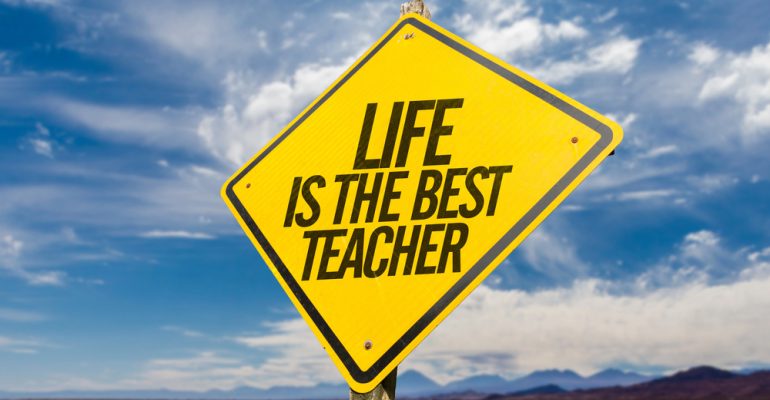
The Greatest Curriculum Is the One You Are Living
“When does the course end?” the learner asked.
The facilitator smiled. “It depends.”
The learner looked puzzled. “I mean…when is the last class?”
The facilitator paused before answering. “The last class ends on Friday.” Another pause. “Yet the real curriculum begins on Saturday morning.”
The room grew quiet. At that moment, everyone understood something they had never considered before. The most important classroom they would ever enter was not inside the SWEET Institute. It was the ordinary life waiting for them outside its doors.
One of the quiet assumptions built into many educational systems is that learning happens primarily inside classrooms. There is a syllabus to complete, assignments to finish, examinations to pass, and eventually a certificate to receive. Once the program concludes, life resumes. Education and living become two separate activities.
The SWEET Institute begins with a different assumption. Education does not prepare us to return to life. Education teaches us how to live it.
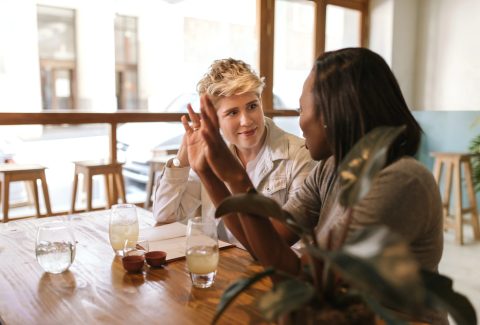
Every conversation becomes an opportunity to practice curiosity. Every disagreement becomes an opportunity to strengthen humility. Every disappointment becomes an invitation to cultivate resilience. Every difficult relationship becomes a mirror revealing parts of ourselves we may never have seen otherwise. Whether we recognize it or not, life is constantly educating us. The question is not whether learning is occurring. The question is whether we are paying attention.
This understanding changes how we think about every course, every seminar, and every certificate program. Their true value becomes visible after everyone has gone home. Does the clinician listen differently? Does the leader lead more wisely? Does the parent become more patient? Has the learner become more thoughtful, compassionate, intentional, and capable of responding wisely when life becomes difficult?
Those are the questions that ultimately determine whether education has fulfilled its purpose.
Perhaps every educational experience contains two curricula. The first is visible, while the second is quieter. It teaches us how to think, respond to uncertainty, disagree respectfully, recover from mistakes, and become the kind of people our knowledge deserves.
At the SWEET Institute, we care deeply about both. We are committed to scientific rigor and evidence-based practice while believing that knowledge reaches its highest purpose only when it contributes to wisdom. We are helping shape reflective human beings who continue growing long after a course has ended.
Seen this way, life itself becomes the practicum. Every difficult conversation, misunderstanding, setback, success, and relationship becomes part of the curriculum.
In other words, graduation is not the end of learning. It is the beginning of self-directed growth. The wisest people remain lifelong students because they recognize that wisdom always invites deeper understanding.
Perhaps that is education’s greatest gift: not simply answers, but a new relationship with life itself.
One-Line Summary
The greatest curriculum you will ever study is not the one you attend. It is the one you live.
SWEET CALL TO ACTION
For the next seven days, end each evening by asking yourself: “What was life trying to teach me today?”
Write your answer.
Pay attention.
You may discover that your greatest teacher has never been a classroom, a book, or a seminar.
It has been life itself.
For the highest purpose of education is not simply to prepare us for life. It is to help us learn from it.
Scientific References
- Dewey, J. (1938). Experience and education. Macmillan.
- Knowles, M. S., Holton, E. F., III, & Swanson, R. A. (2020). The adult learner: The definitive classic in adult education and human resource development (9th ed.). Routledge.
- Kolb, D. A. (2015). Experiential learning: Experience as the source of learning and development (2nd ed.). Pearson Education.
- Mezirow, J. (2000). Learning as transformation: Critical perspectives on a theory in progress. Jossey-Bass.
- Palmer, P. J. (1998). The courage to teach: Exploring the inner landscape of a teacher’s life. Jossey-Bass.