
Why MBT Might Be the Most Important Skill You Learn This Year
Why MBT Might Be the Most Important Skill You Learn This Year
“This Is Not a Training. It’s a Reset.”
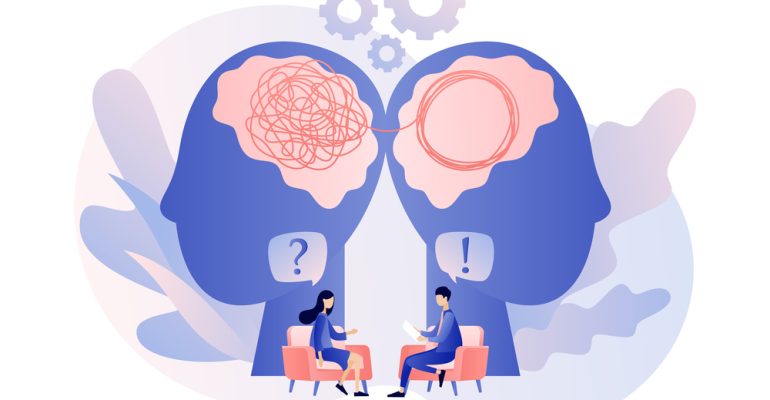
Some trainings give you more tools. This one gives you something more rare: A new mind. Because the hardest part of our work isn’t the diagnosis, it’s the moment when emotion rises, and thinking collapses.
That’s the moment when:
- clients escalate
- clinicians react
- teams split
- systems fail
- ruptures multiply
MBT trains you to hold the line right there. MBT is a safety model. Not just emotional safety. Clinical safety. Because reflective functioning is protective in high-risk relational dynamics—and its collapse is a predictor of rupture, reenactment, and treatment dropout (Fonagy & Luyten, 2009; Bateman & Fonagy, 2016). This is for real-world work.
If you work with people living with:
- personality disorders
- complex trauma
- substance use
- high utilization
- homelessness and severe mental illness
- justice involvement,
- family systems under strain
MBT is not an “extra” skill. It’s a core competency.
SWEET Insight
You can’t change people by being more certain. You change people by being more capable of not knowing—without panicking.
That is the power of mentalization.
Call to Action
MBT Virtual Conference at SWEET — Friday, February 13, 2026
9-1pm ET
Live Virtual CEUs Nationwide + NY (SW, LMHC, Psychologists, MFT)
Register today. Text a colleague right now. Tell your supervisor you want this as a team training. Bring your supervisees. Because the people you serve deserve clinicians who can think clearly under pressure.
And so do you.
Scientific References
- Bateman, Anthony W., and Peter Fonagy. Mentalization-Based Treatment for Personality Disorders: A Practical Guide. Oxford University Press, 2016.
- Fonagy, Peter, and Patrick Luyten. “A Developmental, Mentalization-Based Approach to the Understanding and Treatment of Borderline Personality Disorder.” Development and Psychopathology, vol. 21, no. 4, 2009, pp. 1355–1381. https://doi.org/10.1017/S0954579409990198.
- Luyten, Patrick, and Peter Fonagy. “The Neurobiology of Mentalizing.” Personality Disorders: Theory, Research, and Treatment, vol. 6, no. 4, 2015, pp. 366–379. https://doi.org/10.1037/per0000117.
- Siegel, Daniel J. The Developing Mind. 2nd ed., Guilford Press, 2012.