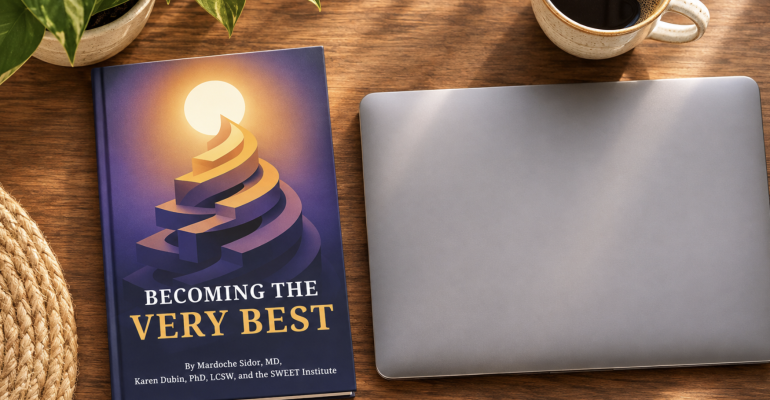
Becoming the Very Best
The Goal Is Not Perfection. It Is Becoming More Fully Yourself.
From an early age, many of us are encouraged to become the best. Becoming the best student, the best employee, or the best leader. Becoming the best parent, the best partner, or the best version of ourselves.
At first, this sounds inspiring. After all, what could be wrong with wanting to grow, improve, and fulfill our potential?
Yet somewhere along the way, the pursuit of excellence can become a pursuit of perfection. We begin measuring ourselves against other people, unrealistic expectations, or an imaginary version of who we think we should be. Every accomplishment becomes another standard to surpass. Every mistake becomes evidence that we have not yet arrived. And every success seems to move the finish line farther away.
What began as a journey toward growth becomes an endless struggle to prove our worth. But what if becoming our very best has nothing to do with becoming perfect? What if it means becoming increasingly aware of who we are, what matters to us, what we are capable of, and how we want to contribute to the world?
Becoming the Very Best invites us to reconsider excellence as an ongoing process of alignment rather than an endless competition for achievement.
It is about developing our strengths without denying our limitations, learning from mistakes without defining ourselves by them, and pursuing meaningful goals without making our worth dependent on reaching them.
Becoming our best is not about becoming someone else. It is about becoming more fully who we are capable of being
The SWEET Insight
Excellence and perfection are not the same. Perfectionism often asks, “Am I good enough yet?” Excellence asks, “What can I learn, improve, or contribute today?” Perfectionism can make mistakes feel threatening. Excellence allows mistakes to become opportunities for learning. Perfectionism measures worth through achievement. Excellence recognizes that worth is already present, while growth remains possible. We do not have to become perfect to become better. And we do not have to become better to become worthy.
SWEET Insight in Action
This week, choose one area of your life where you want to grow. Perhaps it is your work, relationships, health, leadership, creativity, or personal development.
Instead of asking: “How can I become the best?”
Ask: “What would meaningful progress look like for me?”
Then identify one small action that reflects your values and moves you in that direction.
At the end of the week, reflect on three questions:
- What did I learn?
- How did I grow?
- What would I do differently next time?
Resist the temptation to measure your progress only against someone else’s accomplishments. Measure it against your own intentions, values, and development. Because meaningful growth is not always visible through external achievements. Sometimes it is reflected in how we respond, how we relate, what we choose, and who we are becoming.
Quote of the WEEK
“Becoming your very best is not about proving that you are enough. It is about discovering what becomes possible when you know that you already are.”
SWEET Call to Action
If you are ready to pursue excellence without losing yourself in perfectionism, Becoming the Very Best is for you.
Read it, reflect on it, and practice it. Remember that becoming your best does not require becoming someone else’s definition of success. It requires becoming increasingly intentional about how you live, learn, grow, and contribute. The goal is not to become perfect. The goal is to keep becoming.
With growth and purpose,
The SWEET Institute