
SWEET Reflections: When Good Intentions Are Not Enough
SWEET Reflections: When Good Intentions Are Not Enough
Most people who enter the helping professions do so because they want to make a difference. They want to relieve suffering, restore hope, improve lives, and contribute to something meaningful. Yet even the most compassionate professionals can find themselves working within systems that make it difficult to deliver the very care they believe in.
Consider someone seeking help for depression, addiction, housing instability, or a chronic medical condition. They may encounter professionals who genuinely care, yet still struggle to receive the support they need. Appointments are difficult to schedule, information gets lost between providers, and eligibility requirements become obstacles. Services address one problem while overlooking several others, and eventually, the person may stop seeking help altogether.
We often interpret disengagement as a lack of motivation, poor judgment, or resistance. But what if the person’s response is telling us something important about the system itself?
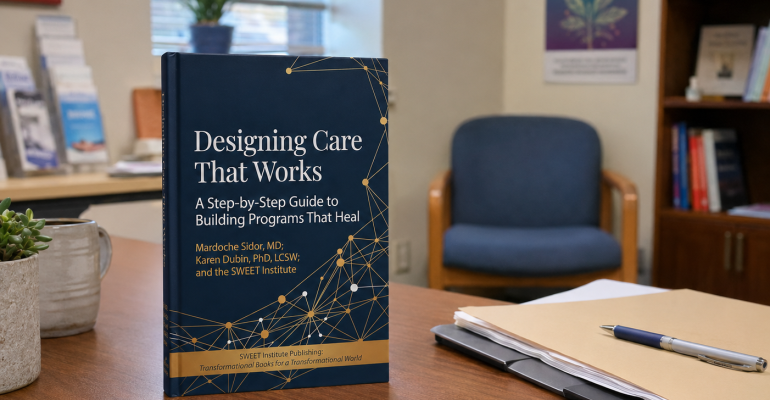
Designing Care That Works invites us to move beyond the assumption that good intentions automatically produce good outcomes. Effective care requires more than dedicated professionals and well-established procedures. It requires thoughtful design, meaningful relationships, coordination, accessibility, accountability, and a willingness to examine whether our approaches are actually improving people’s lives.
The central question is not simply whether we are providing services. It is whether those services are reaching people, addressing what matters to them, and producing meaningful benefits.
The SWEET Insight
A system can be efficient without being effective. It can meet productivity targets while failing to meet human needs. It can follow every procedure correctly while leaving the people it serves feeling unheard, misunderstood, or unsupported.
This does not mean that policies, protocols, documentation, or performance measures are unimportant. They are essential when they support quality, safety, consistency, and accountability. Problems arise when following the process becomes more important than achieving its purpose.
The same principle applies beyond healthcare. Schools, workplaces, community organizations, and even families develop systems intended to help people function and thrive. Over time, however, we may become so accustomed to those systems that we stop questioning whether they are working.
The measure of a system is not how faithfully people follow its procedures, but how effectively it fulfills its purpose.
Insight in Action
This week, examine one process, policy, or routine within an organization, team, or relationship in which you participate.
Begin by asking: What was this process designed to accomplish? Who is supposed to benefit from it? How would we know whether it is working?
Then consider the experience of the people most affected by it. What barriers might they encounter? What assumptions have we made about their needs, motivations, or circumstances? Have we actually asked them what matters most?
Choose one improvement you can realistically test. It might involve simplifying a process, improving communication, reducing an unnecessary barrier, inviting feedback, or changing how success is measured.
Rather than assuming the change will work, observe its effects. Ask those involved what improved, what remained difficult, and what still needs attention.
Meaningful transformation requires a continuous movement from intention to implementation, from implementation to evaluation, and from evaluation to improvement.
Quote of the Day
“Good intentions explain why we begin. Meaningful outcomes reveal whether what we are doing is working.”
SWEET Call to Action
Designing Care That Works challenges us to examine the distance between what we intend to accomplish and what people actually experience.
Whether you are a clinician, leader, educator, caregiver, or someone seeking to improve the systems around you, consider one question:
- “If I designed this entirely around the needs of the people it is meant to serve, what would I do differently?”
The answer may challenge familiar assumptions, established practices, or comfortable routines. But that is often where meaningful improvement begins.
We do not honor our intentions merely by having them. We honor them by examining their consequences and changing our approaches when necessary.
Because the goal is not simply to provide care. The goal is to design care that works.
With purpose, compassion, and commitment to meaningful change,
The SWEET Institute