From Regaining Safety to Reclaiming Agency (continued)
From Regaining Safety to Reclaiming Agency (continued)
Motivational interviewing offers a useful perspective here. Rather than assuming that professionals must supply the motivation for change, we can recognize that individuals already possess values, aspirations, concerns, strengths, and reasons for wanting their lives to be different. Our responsibility is to help them explore these motivations, identify barriers, strengthen confidence, and translate their intentions into meaningful action. This requires curiosity, collaboration, and respect for the individual’s right to determine their own priorities.
The distinction is particularly important in the context of intimate partner violence. When someone has experienced prolonged coercion, the restoration of autonomy is not merely an ethical consideration. It can become an essential dimension of recovery. Every opportunity to make a meaningful choice, establish a boundary, express a preference, or influence a decision can contribute to rebuilding a sense of personal agency.
Perhaps we need to therefore measure recovery not only by the reduction of symptoms but also by the expansion of possibilities. Is the person increasingly able to make decisions without fear? Are they developing relationships in which their boundaries are respected? Are they reconnecting with meaningful activities? Are they becoming more confident in their judgment? Are they beginning to imagine a future that is not primarily organized around avoiding danger?
These questions invite us to understand healing as something larger than symptom reduction.
Healing Is Also a Community Responsibility
Although intimate partner violence occurs within relationships, its consequences extend far beyond them. Abuse can disrupt employment, education, housing, parenting, financial security, physical health, and social participation. Children may experience profound consequences from exposure to violence. Families and communities may struggle to respond, particularly when resources are limited or when cultural expectations discourage disclosure.
For these reasons, healing cannot be treated exclusively as an individual psychological task. A person may make extraordinary progress in therapy while continuing to face housing instability, financial insecurity, legal challenges, discrimination, or inadequate access to healthcare. These circumstances can interfere with recovery even when motivation and psychological insight are strong.
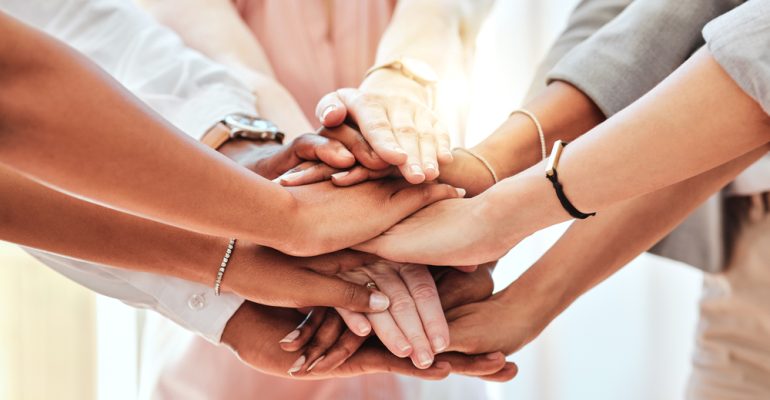
Communities and institutions therefore have responsibilities that extend beyond identifying abuse. They must help create environments in which safety, connection, opportunity, and meaningful participation become possible. This includes accessible healthcare, trauma-informed services, legal advocacy, economic opportunities, supportive housing, culturally responsive care, and prevention efforts that challenge the social conditions allowing violence and coercion to persist.
A truly comprehensive response asks not only how individuals can recover from abusive relationships, but also how families, organizations, and communities can become places where healthy relationships are more likely to develop and where people experiencing abuse can obtain meaningful support.
From Surviving the Past to Creating the Future
There is another dimension of healing that deserves attention: the possibility of rediscovering meaning.
When someone has spent years organizing life around survival, the future may initially feel difficult to imagine. Much of their attention may have been devoted to anticipating danger, managing another person’s emotions, protecting children, or simply getting through each day. Questions about personal fulfillment, purpose, creativity, relationships, and aspirations may have received little attention.
As safety and stability improve, new questions can emerge. What kind of life do I want to build? What relationships do I want to cultivate? What matters most to me? What possibilities have I not yet explored? What would it mean to live according to my own values rather than someone else’s demands?
These questions do not minimize the significance of what happened. Nor do they imply that trauma must produce personal growth. No one should be expected to find a benefit in having experienced abuse.
Rather, they recognize that a person’s future need not be entirely determined by their past. Healing can include the possibility of developing new relationships, discovering new strengths, pursuing meaningful goals, and experiencing joy without requiring the individual to deny or erase their history.
The goal is not to transform suffering into an obligation to become stronger. It is to ensure that suffering does not become the only story the person is permitted to tell about their life.
The Real Meaning of Healing
Throughout this series, we have explored intimate partner violence from four interconnected perspectives. First, we challenged the assumption that domestic violence must involve visible physical injury. We examined coercive control and the gradual erosion of autonomy. Second, we reconsidered the question of why people remain in abusive relationships, recognizing that decisions occur within complex circumstances shaped by attachment, fear, resources, responsibilities, and danger. Third, we explored what happens when someone discloses abuse and how our response can either strengthen or undermine safety, trust, and agency.
This final article brings us to a broader question: What are we ultimately trying to make possible?
Certainly, we want violence to stop. We want people to be safe. We want injuries prevented, threats addressed, and immediate risks reduced. But if our vision ends there, we risk defining recovery entirely by the absence of what was harmful.
Healing asks us to consider the presence of what makes life meaningful.
The presence of safety rather than the constant anticipation of danger. The presence of autonomy rather than coercion. The presence of relationships grounded in respect rather than fear. The presence of opportunities rather than restrictions. The presence of purpose, belonging, and hope.
Perhaps this is the most important distinction of all: Survival is about making it through what is happening. Healing is about expanding what becomes possible afterward.
For helping professionals, this distinction changes the nature of our work. We are not simply identifying problems, reducing symptoms, or arranging services. We are participating in a process through which individuals may gradually reclaim their capacity to shape their own lives.
Perhaps the most powerful measure of our success is not whether someone eventually lives the life we believe they should live, but whether they increasingly have the safety, resources, confidence, and freedom to choose the life they want.
The ultimate goal is not merely a life without abuse. It is a life in which safety, dignity, connection, meaning, and freedom can flourish.
Selected References
- American Psychological Association. (2017). Clinical practice guideline for the treatment of posttraumatic stress disorder (PTSD) in adults.
- Centers for Disease Control and Prevention. (2017). Preventing intimate partner violence across the lifespan: A technical package of programs, policies, and practices.
- National Institute for Health and Care Excellence. (2014). Domestic violence and abuse: Multi-agency working (PH50).
- World Health Organization. (2013). Responding to intimate partner violence and sexual violence against women: WHO clinical and policy guidelines.
- World Health Organization. (2014). Health care for women subjected to intimate partner violence or sexual violence: A clinical handbook.